Trying to choose between a classic cottage and a modern home in Inlet Beach? It is a smart question, because this market is not just about looks. You are weighing charm, layout, maintenance, flood considerations, and even rental rules in one of Walton County’s most distinctive coastal communities. This guide will help you sort through the tradeoffs so you can decide which style better fits your goals. Let’s dive in.
Why Inlet Beach Feels Different
Inlet Beach has a development pattern shaped by both history and local planning. Walton County’s neighborhood plan ties the area’s modern roots to the 1920s U.S. 98 corridor and later postwar development, while also aiming to preserve neighborhood character.
That matters when you compare home styles. Inlet Beach is not a place where anything goes from a design standpoint. The local overlay encourages traditional materials, articulated facades, featured front doors, and more classic roof forms, while discouraging flat roofs.
Because of that, the choice here is often less about old versus ultra-contemporary design and more about two versions of coastal living. A cottage may lean into intimacy and established charm, while a newer home may offer more space, a more current layout, and easier day-to-day function.
What Defines a Classic Cottage
Classic cottages are usually smaller homes with a porch-forward look, gable roofs, natural materials, and simple floor plans. Research sources commonly describe cottages as compact homes, often around 1,200 square feet or less, with a casual beach-house or country-house feel.
In Inlet Beach, those qualities fit naturally with the neighborhood plan. Traditional materials, visible front entries, and familiar roof lines all align well with the cottage style, which helps explain why cottages feel so at home in this setting.
Why Buyers Love Cottages
A classic cottage often wins buyers over with personality. You may get a more intimate scale, a relaxed coastal vibe, and the kind of character that feels hard to replicate in newer construction.
For second-home buyers, that can be a big emotional draw. If you picture mornings on the porch and a lower-key beach retreat, a cottage may feel more aligned with the lifestyle you want.
Where Cottages Can Be Challenging
Older homes can come with more uncertainty. Depending on the property, you may face renovation needs tied to roofing, windows, HVAC, or other major systems.
There is also a planning angle to consider. Walton County allows certain older lawful structures that do not fully meet current standards to remain as legal nonconformities, which can affect how flexible future changes may be. That does not mean every cottage is difficult to improve, but it does mean you should review each property carefully before you commit.
What Defines a Modern Home
Modern home design usually emphasizes open floor plans, larger windows, clean lines, and a more function-focused layout. In many markets, that also includes dramatic exterior geometry and flat roofs.
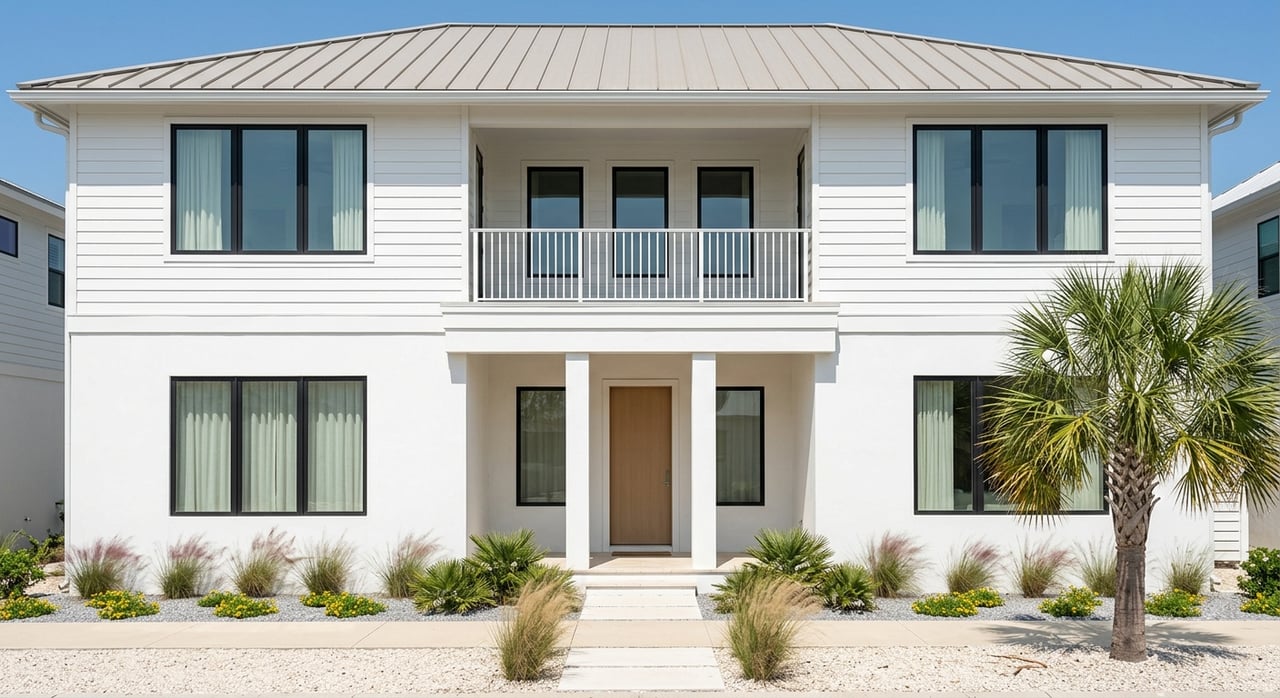
In Inlet Beach, modern homes often look a little different from that stereotype. Because the local neighborhood overlay encourages traditional street-facing forms and discourages flat roofs, many newer homes blend fresh interiors with a more coastal-traditional exterior appearance.
Why Buyers Love Modern Homes
For many buyers, a newer home means simpler living from day one. You may find larger rooms, more open living areas, newer systems, and a more turn-key experience overall.
That can be especially appealing if you are buying from out of state or want a property that needs less immediate attention. A modern Inlet Beach home often delivers current-day livability without stepping too far outside the area’s established coastal character.
Where Modern Homes Can Be Challenging
The tradeoff is often feel and scale. A newer home may offer efficiency and convenience, but some buyers feel it lacks the atmosphere or lived-in charm of an older cottage.
You may also find that newer homes are designed with more square footage and guest capacity in mind. That can be a plus for some owners, but if your goal is a simple beach escape, bigger is not always better.
Compare Layout and Lifestyle
When you are deciding between these two styles, floor plan matters as much as curb appeal. The best fit usually comes down to how you plan to use the home.
Cottage Lifestyle Fit
A cottage may be a better match if you want:
- A cozy second home with a relaxed beach feel
- More architectural character and established charm
- A simpler footprint with less interior space to furnish and manage
- A home that feels personal rather than purely performance-driven
This style often works well for buyers who value atmosphere over square footage.
Modern Lifestyle Fit
A modern home may be a better match if you want:
- Open-concept living and newer finishes
- More bedrooms or flexible guest space
- A turn-key property with fewer immediate upgrade decisions
- A layout that supports part-time use, full-time living, or rental turnover more easily
This style often appeals to buyers who want convenience, capacity, and current functionality.
Maintenance and Code Matter
In a coastal market, style is only part of the equation. Maintenance and code compliance can have a major impact on cost, comfort, and future planning.
Walton County states that building permits submitted after December 31, 2023 must follow the 2023 Florida Building Code. The county also requires sealed certification from a Florida-registered architect or engineer for coastal building zone compliance with wind-load criteria.
That gives newer homes an advantage in terms of a current-code starting point. With an older cottage, you may need to budget for updates or evaluate how older features and systems compare with current standards.
Questions to Ask About Either Style
Before you move forward, ask practical questions such as:
- How old are the roof, windows, and HVAC systems?
- Has the property been updated recently?
- Are there any known deferred maintenance items?
- If you want to renovate later, what local planning or building constraints could apply?
These questions can help you compare two homes more fairly, even if they look very different on the surface.
Flood Risk Is Property-Specific
Flood risk should be part of your decision no matter which style you prefer. FEMA identifies Zone V and VE as high-risk coastal flood areas with added wave hazard, and buildings in those zones must meet elevation and anchoring requirements. Flood insurance is also required for federally backed mortgages in high-risk zones.
The key point is that flood exposure is not just about whether a home is old or new. Walton County directs buyers to use its interactive mapping tools to verify flood zones and evacuation routes on a parcel-by-parcel basis.
That means a cottage is not automatically riskier, and a modern home is not automatically safer. You will want to evaluate the specific lot, elevation profile, and construction details of any property you are considering.
Rental Use Can Shift the Decision
If you are thinking about short-term rental income, the cottage-versus-modern question becomes even more practical. Walton County requires annual registration for short-term vacation rentals, and owners must already have Florida Department of Revenue, DBPR, and county tourist-development-tax registrations before local approval is granted.
The county also requires rental advertising to include the certificate number and tourist development tax registration number. For certain taller rental properties, there are added inspection and evacuation-map requirements.
Parking and Occupancy Affect Performance
Walton County ties rental compliance to occupancy and parking standards. The county states that short-term rentals must provide one parking space per 900 square feet of gross floor area, occupancy is limited to one person per 150 square feet, and parking must be on the deeded property.
That often makes larger, newer homes easier to configure for multiple guests and vehicles. Still, a cottage can work well as a rental if your goal is a smaller-scale, charm-driven guest experience rather than maximum capacity.
Rental Costs to Factor In
Walton County lists current annual registration fees at $300 per property for individual registration and $227 per property for community registration. The Walton County Clerk also states that South Walton rentals are charged a 5% tourist development tax on rent plus required non-refundable fees.
The county further notes that booking platforms such as Airbnb and VRBO do not remit that tourist development tax for owners. If rental use is part of your plan, these compliance steps and costs should be part of your decision from the start.
How to Choose the Right Fit
In most cases, this decision comes down to your priorities more than the label on the listing. Inlet Beach is really offering you different versions of coastal livability under a neighborhood overlay that values traditional character.
A cottage may be the better choice if you want charm, a smaller footprint, and a true beach-retreat feel. A modern home may be the better choice if you want turn-key ease, larger gathering spaces, and a layout that supports guests or rental use more efficiently.
The smartest comparison usually includes these factors:
- Square footage
- Bedroom count
- Parking capacity
- Flood zone and elevation profile
- Renovation tolerance
- Expected maintenance needs
- Short-term rental goals
When you review homes through that lens, the right answer usually becomes much clearer.
If you are weighing cottages against newer homes in Inlet Beach, local context matters. From neighborhood overlay rules to flood mapping and rental compliance, a property that looks perfect online can feel very different once you understand how it fits your goals. If you want clear, practical guidance as you compare options, Erich Hardy can help you evaluate the details and move forward with confidence.
FAQs
What is the main difference between classic cottages and modern homes in Inlet Beach?
- Classic cottages usually offer more charm, a smaller scale, and a traditional beach-house feel, while modern homes usually offer more open layouts, newer systems, and turn-key convenience.
How do Walton County rules affect modern home design in Inlet Beach?
- Walton County’s neighborhood overlay encourages traditional materials, visible front entries, and classic roof forms while discouraging flat roofs, so many newer homes look coastal-traditional from the street even when the interiors feel modern.
Are older cottages in Inlet Beach harder to renovate or expand?
- Some older lawful structures may continue as legal nonconformities under the county plan, which can affect future flexibility, so each property should be reviewed individually before you plan major changes.
Do newer homes in Inlet Beach have an advantage for maintenance and code compliance?
- Newer homes generally start from a current-code baseline under the 2023 Florida Building Code and coastal wind-load requirements, while older cottages may require more updates or system reviews.
Does flood risk in Inlet Beach depend on home style?
- Flood risk is tied more to the specific parcel, flood zone, elevation, and construction details than to whether the home is a cottage or a modern build.
Are modern homes better for short-term rentals in Inlet Beach?
- They often have an advantage because larger layouts can more easily support guest count and parking needs, but cottages can still perform well when the appeal is character, simplicity, and a smaller guest experience.
What short-term rental rules should buyers know in Inlet Beach?
- Walton County requires annual registration, prior state and tax registrations, specific ad disclosures, and compliance with local occupancy, parking, and in some cases inspection requirements.
What should buyers compare first when choosing between home styles in Inlet Beach?
- Start with square footage, bedroom count, parking, flood-zone details, maintenance needs, renovation tolerance, and whether you want a character-focused retreat or a more turn-key home.